🌾 Resistant Starches & Persian Cooking: A Delicious Way to Support Gut Health
By Beata Nazem Kelley
Resistant starch is a topic trending in the nutritional world but has been a part of Persian cooking long before it was ever a buzz word. From rice to legumes to hearty grains, our traditional techniques naturally increase resistant starch without ever using the term.
If you’re curious about what resistant starch is and how to bring more of it into your cooking (especially Persian dishes), this post will walk you through everything you need to know.
⭐ What Is Resistant Starch?
Resistant starch is a type of carbohydrate that resists digestion in the small intestine. Instead of breaking down like a typical starch, it travels to the colon where it acts like prebiotic fiber, feeding beneficial gut bacteria.
This means resistant starch can help:
- Support gut health
- Increase satiety
- Reduce blood sugar spikes
- Promote healthy digestion
- Support colon health through short-chain fatty acids (like butyrate)
There are several types of resistant starch, but for home cooks the most relevant are:
- RS1 – in whole grains and legumes
- RS3 – formed when cooked starches are cooled and optionally reheated
- RS5 – formed when starch binds with fats (like ghee or oil)
Now here’s where Persian food gets interesting…
🇮🇷 Persian Cuisine Is Naturally Full of Resistant Starch
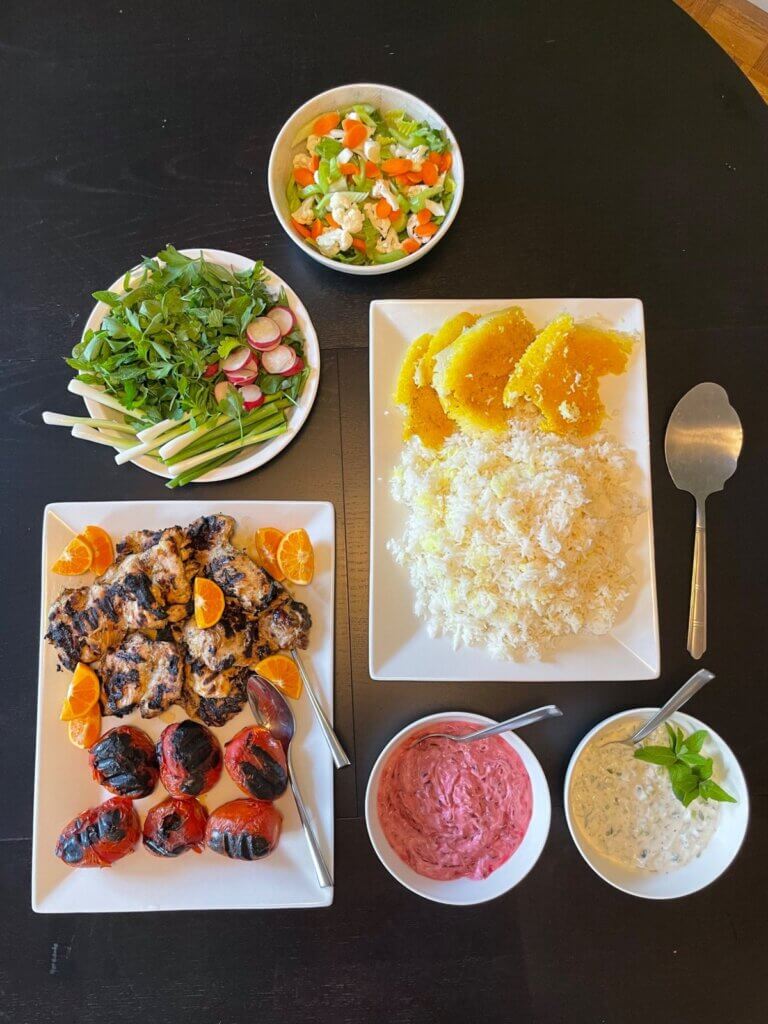
Without naming it, Persian cooking already uses techniques that create resistant starch — cooling, slow cooking, combining grains with legumes, and pairing starches with yogurt.
Let’s look at some delicious examples.
🍚 1. Persian Rice
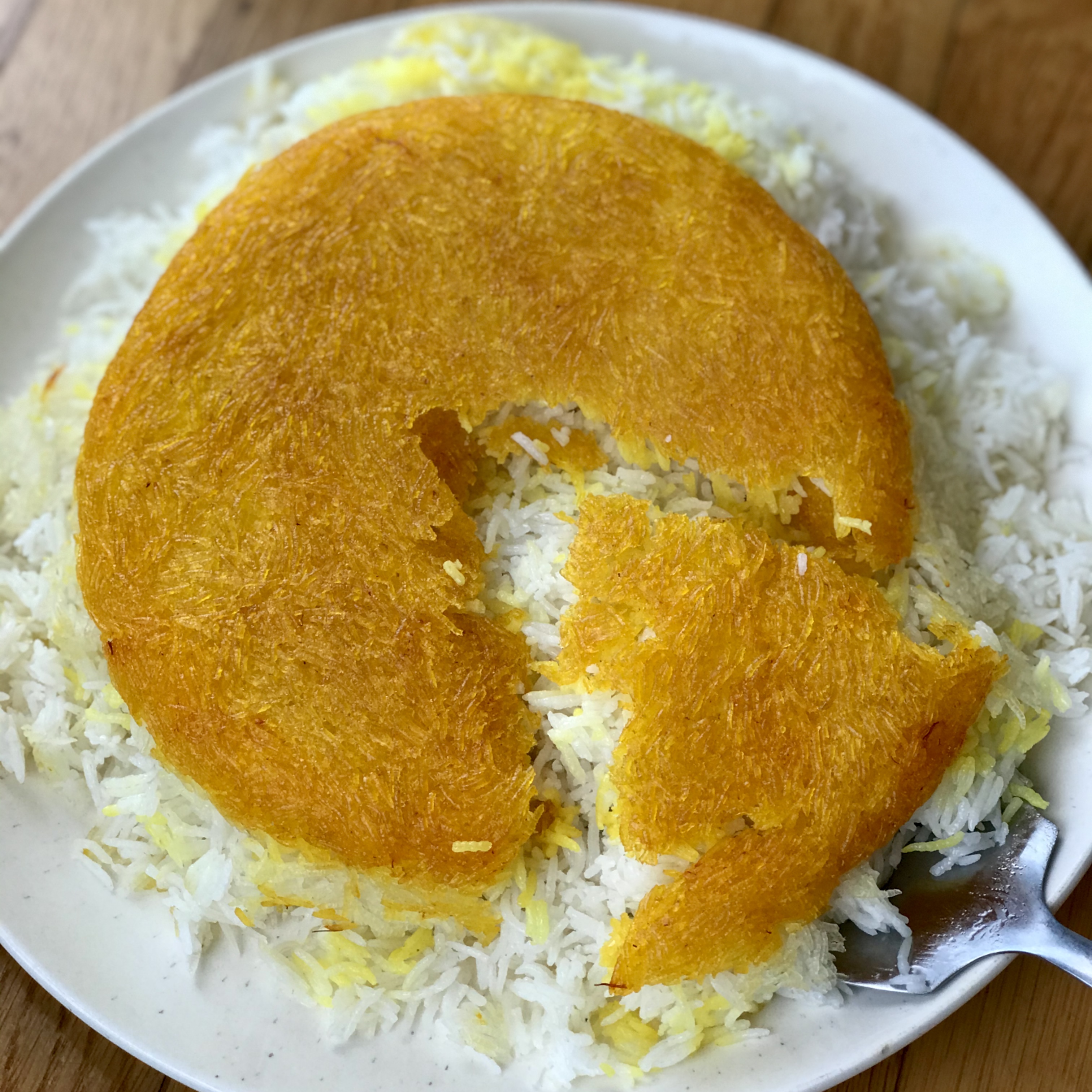
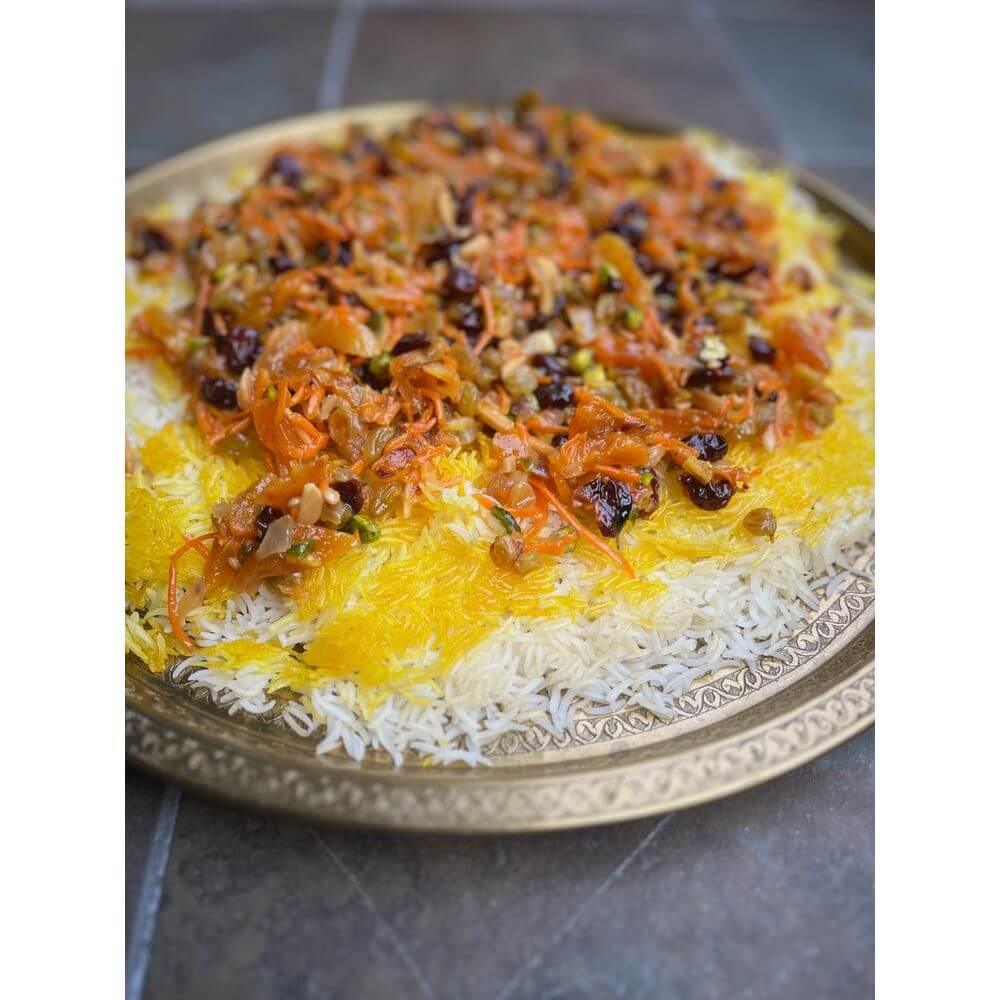
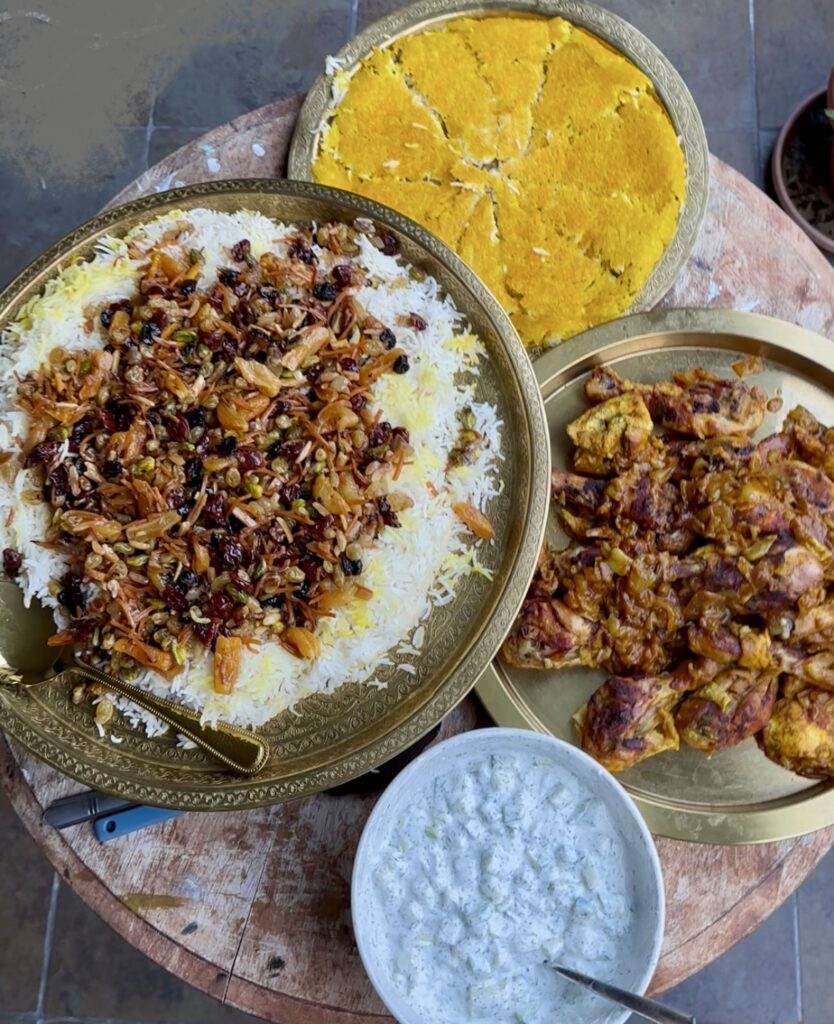
Persian rice — whether fluffy white kateh, jeweled rice, or crispy tahdig — is one of the easiest ways to incorporate resistant starch.
How Persian rice builds resistant starch:
- When you cook rice and cool it, the starch molecules reorganize and become resistant to digestion .
- When you reheat the rice, that resistant starch actually increases.
- When rice is cooked with oil or butter, especially in tahdig, it forms RS5 — another beneficial form of resistant starch.
How to incorporate more resistant starch in rice dishes:
- Cook your rice the night before and reheat gently.
- Make extra rice intentionally — leftovers are rich in RS3.
- Enjoy tahdig guilt-free — the starch and fat combo helps form RS5.
Persian food wisdom wins again.
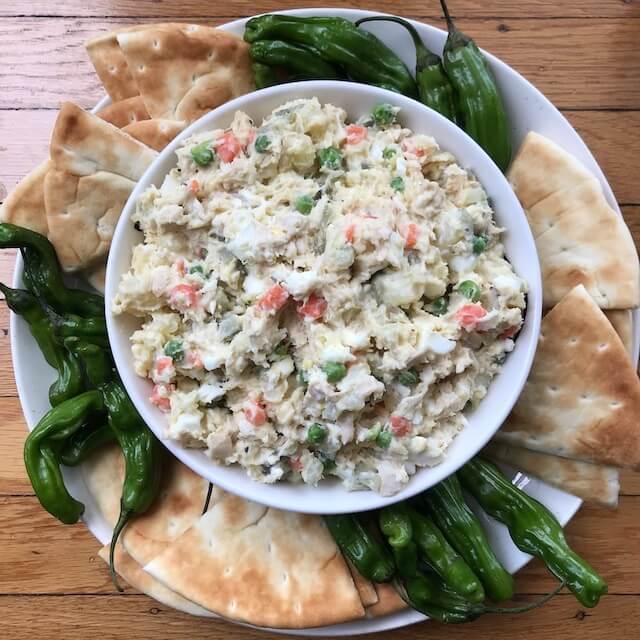
🥔 2. Potatoes in Olivieh, Kuku, and Stews
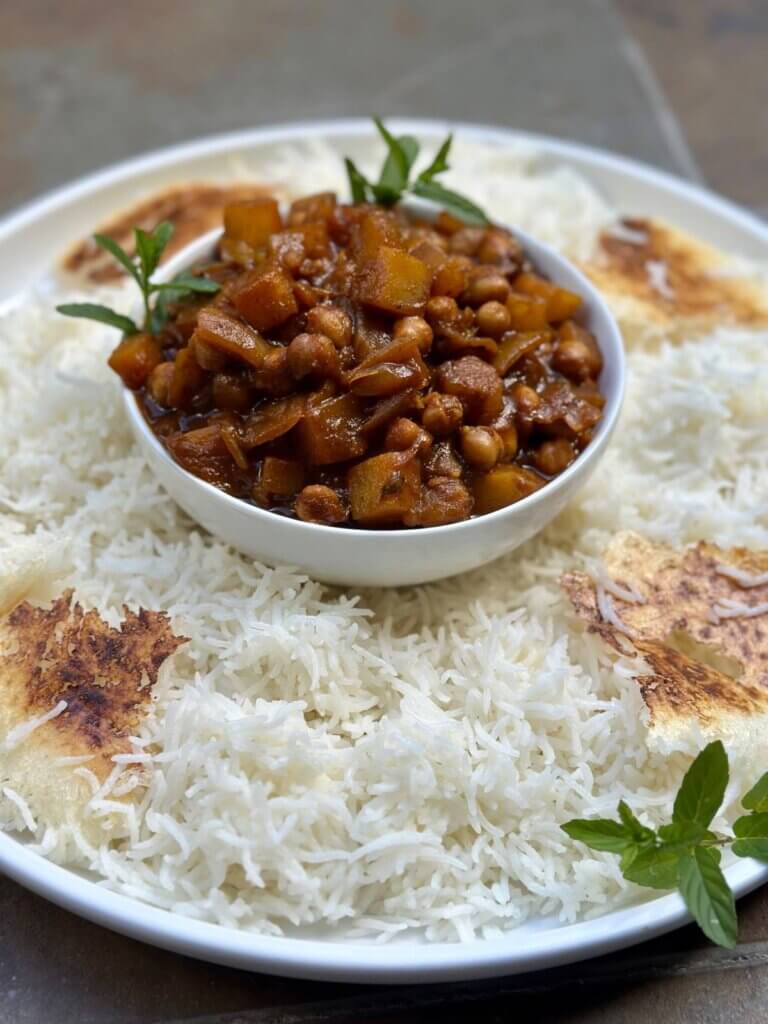
Potatoes are naturally high in resistant starch when cooled. Persian dishes like Salad Olivieh uses pre-boiled potatoes and it’s served cold or room temperature. I like topping my Easy Chickpea Gheymeh stew with precooked potatoes to get more resistant starch!
How to increase resistant starch in Persian potato dishes:
- Boil potatoes, cool fully, then incorporate them into recipes.
- Store cooked potatoes in the fridge overnight before frying or mixing.
- Reheat gently instead of overcooking.
Leftover potatoes? Even better, just throw it in the air fryer to crisp it up!
🥣 3. Legumes in Persian Cooking
Persian cuisine embraces lentils, chickpeas, and beans — all excellent sources of resistant starch.
Think of dishes like:
- Adas Polo (lentil rice)
- Abgoosht
- Chick Pea and Potato Gheymeh Stew
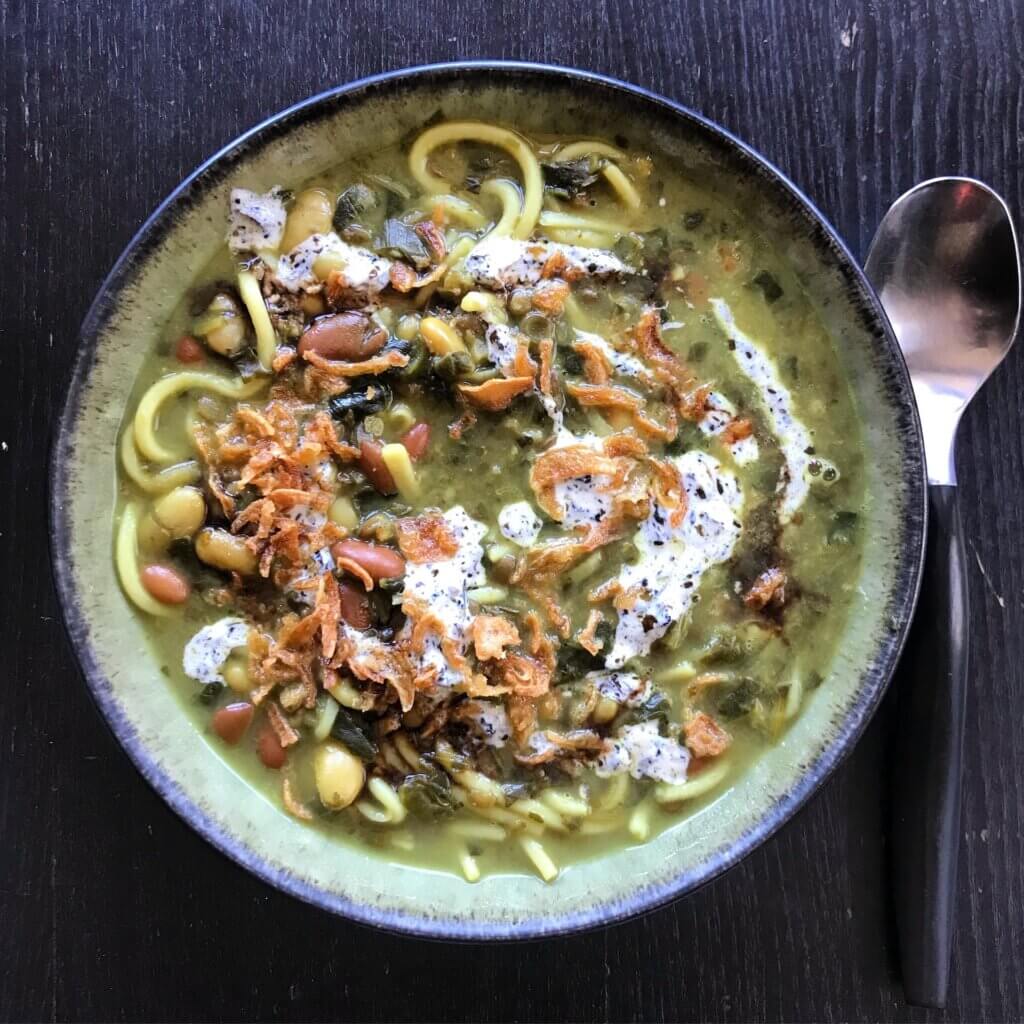
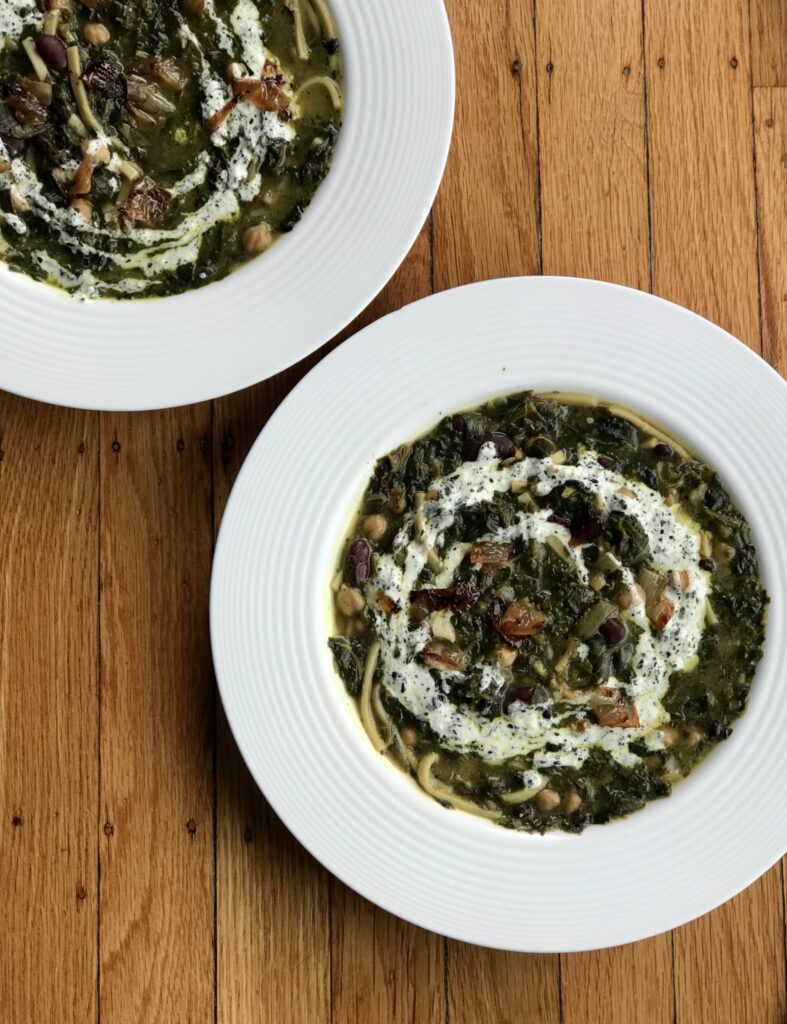
- Ash Reshteh
- Ash-e-jo (barley soup)
Legumes naturally contain RS1 and RS2, and when cooled or used in leftover dishes, they develop RS3 as well.
How to boost RS in legume dishes:
- Use whole lentils and chickpeas (not pureed).
- Let stews rest before eating — they get even better the next day.
- Batch-cook legumes and store them in the fridge for salads or rice dishes.
🌾 4. Whole Grains: Barley, Wheat, Bulgur
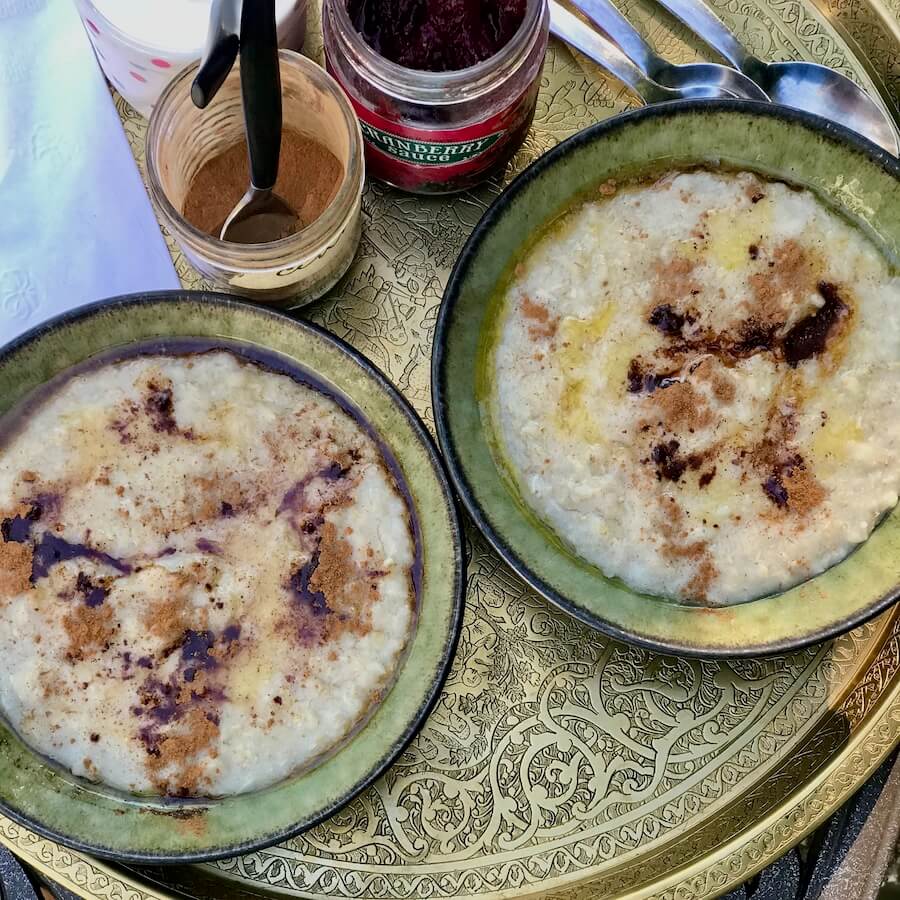
Persian classics like ash-e-jo, haleem, and regional bulgur dishes are naturally rich in resistant starch.
Slow cooking and cooling increase RS3, making these dishes deeply nourishing and great for digestion.
Tips:
- Make grains ahead and cool overnight.
- Use barley or bulgur in soups or warm salads.
- Reheat gently to retain resistant starch benefits.
- Freeze Haleem in individual servings for an easy meal!
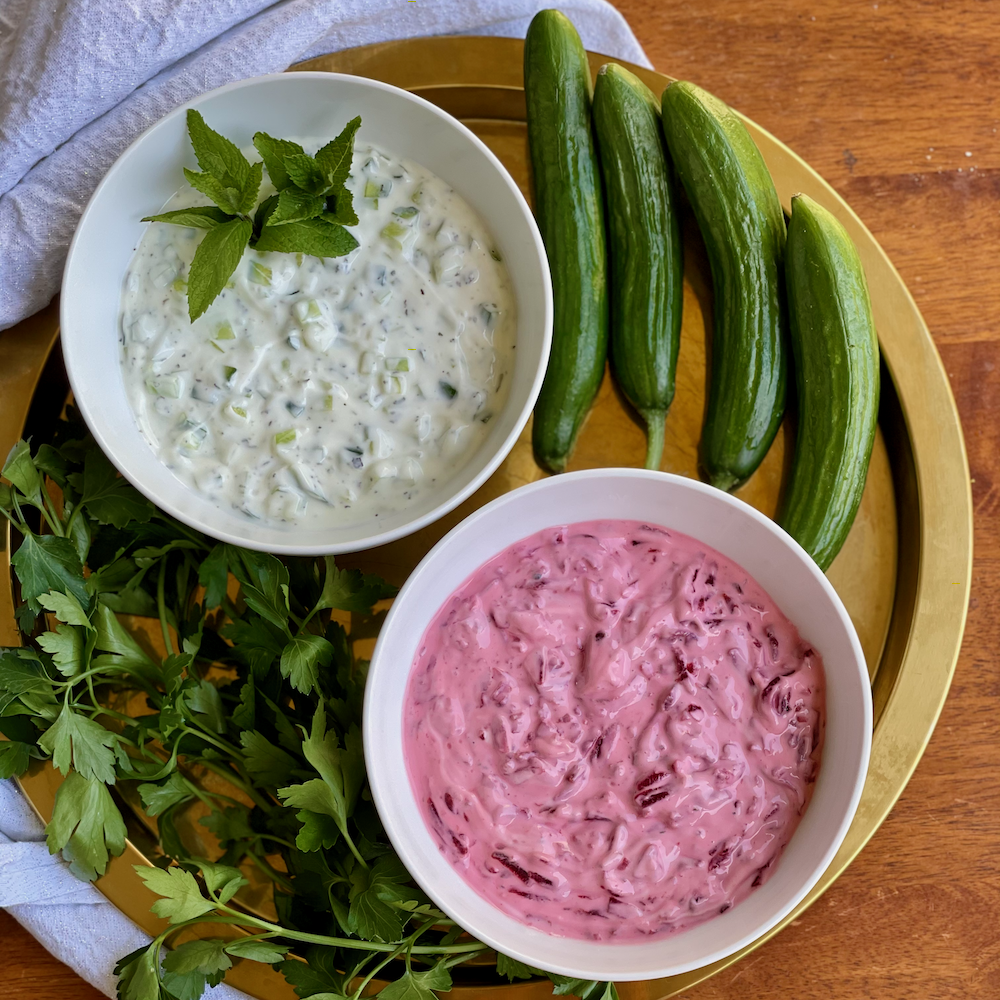
🥛 5. Yogurt Pairings = Probiotic + Prebiotic Power
Have you ever heard of “Kateh ba Maast”? It’s a Persian paring of plain yogurt with rice to help sooth an upset stomach. We now know that the pairing a starch-rich food with yogurt, creates a natural synbiotic meal (probiotics + prebiotics).
Examples:
- Kateh White Rice with beet yogurt maast o laboo
- Jeweled Persian Rice with maast-o-khiar cucumber yogurt dip
- Ash Reshteh topped with plain yogurt
- Salad Olivieh served with pickles + yogurt sides, or subbing some of the mayo for yogurt
The combination supports digestion even more than resistant starch alone.
🍽️ How to Incorporate More Resistant Starch Into Your Persian Cooking
Here are practical ways to start today:
✔️ Cook, cool, reheat
- Make rice, potatoes, and grains ahead of time.
- Store in the fridge and reheat gently for meals.
✔️ Embrace leftovers
Persian food gets better after resting — and so does its nutrition.
✔️ Add legumes regularly
- Lentils in soups
- Chickpeas in salads
- Mixed-bean dishes
- Adas polo for quick weeknight dinners
✔️ Use healthy fats
Oil or ghee in tahdig helps create RS5, a beneficial resistant starch-fat complex.
✔️ Pair starches with yogurt
A natural gut-friendly combination already rooted in Persian tradition.
💛 Final Thoughts
Modern nutrition is only now catching up to what Persian cooks have known intuitively for centuries: slow cooking, cooling, and simple whole ingredients create deeply nourishing foods. By understanding resistant starch, we can celebrate our culinary traditions even more — and bring more gut-healthy meals to our tables.
If you try incorporating resistant starch into your Persian dishes, tag me @BeatsEats so I can see what you make!